
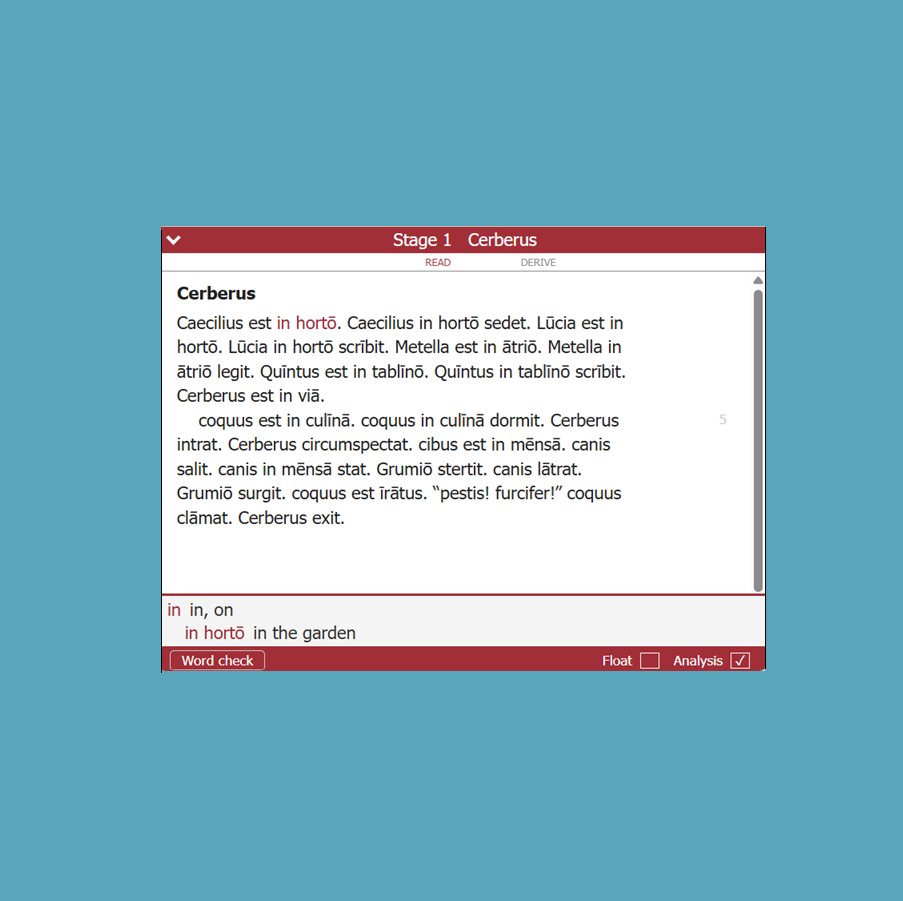
In this post, CSCP’s Mair Lloyd shares some of the enhancements made to story explorers for the UK and International 5th edition Cambridge Latin Course (see Figure 1 for an example). This post builds on ideas Mair presented at the Classical Association conference in St Andrews in April 2025 and in a blog post authored with Maddie Golding for Cambridge University Press.
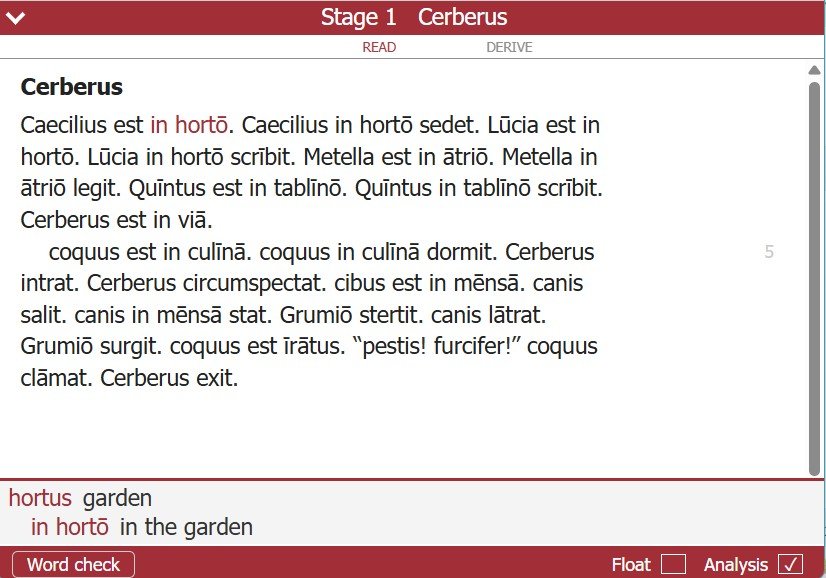
Figure 1: The first story explorer for the new UK & International 5th edition
I have a long history with story explorers and their close cousins the Perseus Tufts Latin texts. These online digital resources make it possible to see the dictionary definition and parsing of a word by clicking on it. The Perseus texts, including this one on Book II of the Aeneid, helped me succeed in one of my Open University Classics degree modules. As an online home tutor in the 2010s, I enjoyed sharing the Cambridge Latin Course explorers with my students across the world, and since 2022, I have been using story explorers developed for the Open University Classical Latin module with my online students there.
All these experiences have made me really positive about their use, but it was in 2017, when I joined the CSCP and started making explorers myself, initially for Eduqas GCSE Latin, and later for the new UK & International 5th editition of the CLC, that they became an obsession and my pride and joy. And so, I get concerned when I hear comments about their lack of value from teachers or when I see research claiming they can ‘engender a sense of laziness towards grammar’ or lead to ‘inaccuracies’ if used incorrectly (Hunt F., 2018, p. 48). Reflecting on these views made me determined to take the opportunity of the new edition to ensure its story explorers were optimally integrated with its progression through its language features. Equally importantly though, I wanted to share with teachers and learners the ways in which this integration was evolving so that they could gain as much value as possible from these learning tools. This second ambition led to my presentation at the 2025 Classical Association conference and also motivated the writing of this blog post.
The importance of scaffolding
I began my CA presentation by making the case for ‘scaffolding learning’. This was something I had studied in my doctoral research at the Open University and I gave an account of it in my thesis (Lloyd, 2017, p.52-55). Figure 2 shows a slide that I used to explain this.
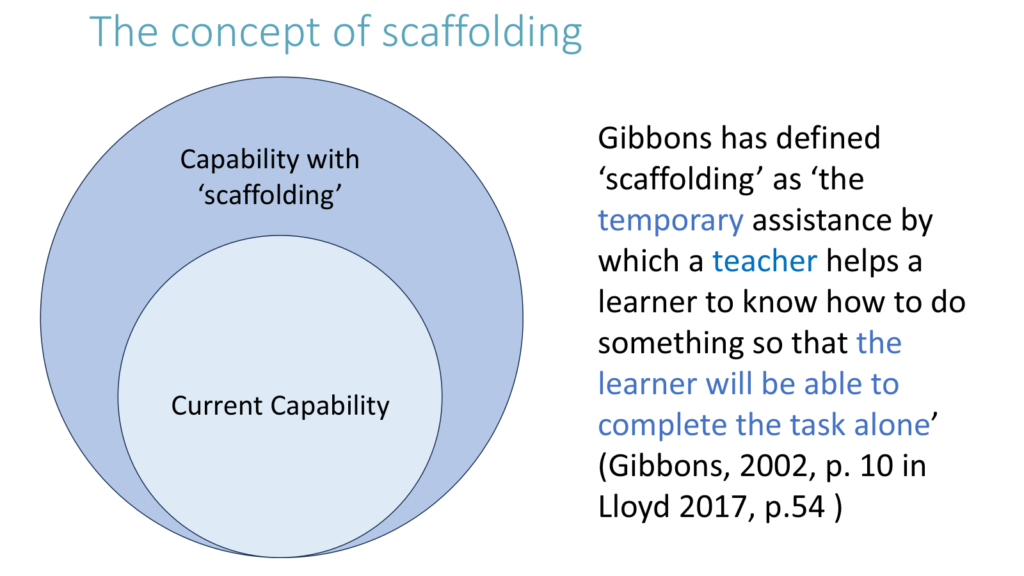
Figure 2: Expanding capability with scaffolding
Scaffolding is essentially temporary help that, expands the learner’s capability so that the help is no longer necessary. Figure 3 below illustrates this concept with a child learning to ride a bike while an adult helps him stay stable and happy by holding the seat. One day the child will happily ride away on his own having avoided the fear, or actual hurt, of falling in his earliest attempts.

Figure 3: Providing ‘scaffolding’ to help a child learn to ride a bike. Image credit: Microsoft stock image
Similarly, ‘the interactive nature of the Explorer Tool can provide the scaffolding and comfort needed to help students get started’ (Hunt, F., 2018, p. 45). When I am creating explorers, I like to think of myself as a helper supporting those students, providing just the help they need at their various stages of development so that they can stay resilient and happy and enjoy their progress towards mastery. With this in mind, I have been thinking hard about exactly what help is appropriate at what point when working through the CLC books. The new edition Latin content has been designed with extraordinary dedication and attention to detail by my colleague, Lisa Hay and her team of writers, and she and I worked together to come up with some principles that now drive my explorer design.
Explorers: the basics
First though, some information about the explorers themselves. As you can see in Figure 4, there are three potential lines that appear when a word in an explorer is clicked. In this example, the word ad (shown in red) has been clicked.
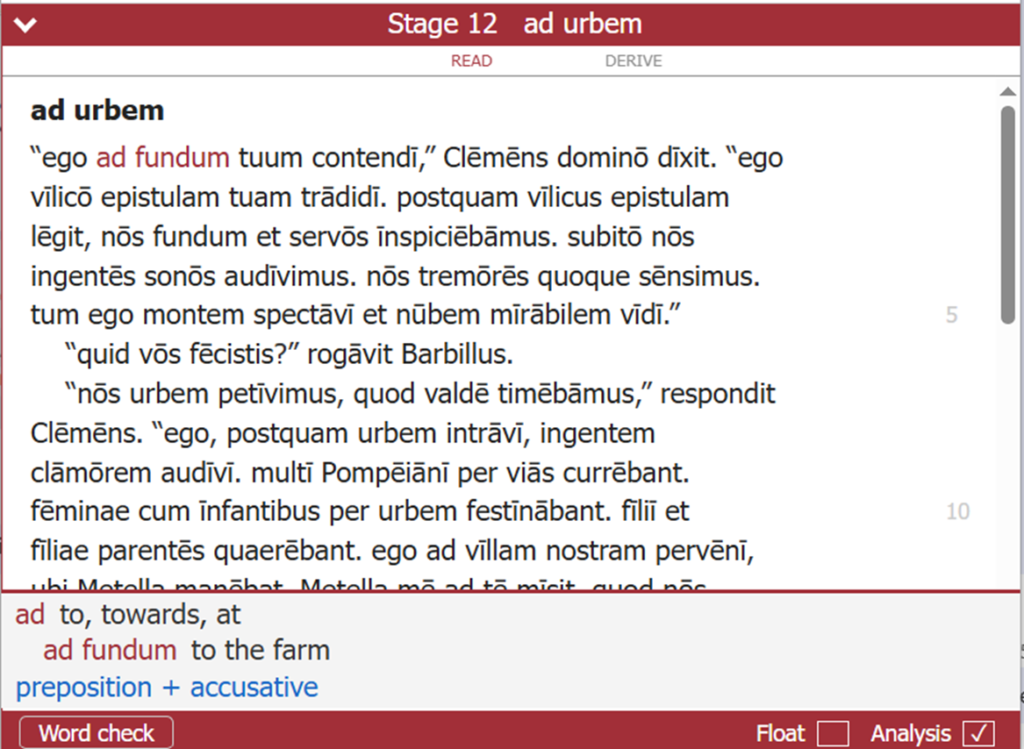
Figure 4: the three lines of a story explorer
The top line (line 1) gives the meaning (or list of meanings) of the word that has been clicked as it appears in the glossary at the back of the relevant book. This line is always visible.
Line 2 gives a ‘note’ that explains the meaning of a word or phrase in its context. This line is not always used. In this example, because ad is part of a prepositional phrase with fundum, that also becomes highlighted in red and their joint meaning is shown in line 2.
Line 3 shows grammatical parsing of the word that has been clicked. This line not always visible.
Explorers: displaying information
The principles Lisa and I devised govern what is shown in each of the three lines depending at what stage, and where within a stage, the story occurs and we intend that they reflect the way language features are introduced in the physical books. As experienced teachers of the CLC know well, grammar items are often met in stories or model sentences before they are explained in the About the Language sections (or Building Words in Book III onward).
So, in the story explorers:
- We add a note (line 2) to give the meaning of Latin requiring grammatical knowledge in stages before the grammar item is formally explained. For example, in Stage 1, learners have not yet met prepositions nor the ablative case and so we simply provide the meaning of a phrase like in hortō. This avoids prepositional phrases and their cases from becoming a stumbling block while learners wait till they are introduced in Stage 11. By the time learners do reach Stage 11, they will have met many examples of this type and have become very comfortable with accepting and intuitively grasping the meanings given in a note each time they occur.
- We do not show parsing items (line 3) until they have been formally explained in About the Language or Building Words. This means that nothing perplexing is shown that might undermine the learner’s confidence that they have understood what they have learned so far. The course has been carefully designed to introduce language features at a manageable pace and in a sensible sequence and the explorers reinforce this design by displaying only information consistent with it.
- We do show parsing/grammar terms in the explorers for stories in the next stage after that in which an explanation appears in About the Language or Building Words and in all subsequent stages. In the stage following an explicit explanation of a feature, any relevant scaffolding notes (line 2) are still shown so that learners can see the parsing alongside its meaning for one stage. See for example Figure 4 above, where propositional phrases introduced in Stage 11 are shown with both parsing and a note of meaning throughout Stage 12. In subsequent stages, line 2 notes are no longer shown and the learner is encouraged to make meaning themselves using their understanding of the new language feature. Line 3 continues to provide reinforcement of the parsing. An exception to this principle occurs if the concept is explained in the final stage of a book, when parsing appears in the final stage rather than waiting for the next book. The logic here is that students may not go on to the next stage for some time or indeed they may not go on to the next book at all. *
Explorers: supporting students
Our principles aim to let explorers support students in three ways:
- They scaffold student learning by giving meanings (line 2) for features that students have not yet met.
- They support the explicit explanation of language features by continuing to give meanings in the stage in which the explanation occurs and in the stage where parsing is first displayed.
- They reinforce prior learning by providing parsing information (line 3) consistent with the stage reached in the physical book, and encourage students to use that learning to make meaning themselves by withdrawing the ‘scaffolding’ of notes at the appropriate point. Notice too that students can be encouraged to try turning off the parsing information (using the ‘Analysis’ tick box at the bottom right of the screen) once they are confident in their own ability to recognise relevant forms.
Looking forward
I hope that our work on the new edition explorers is moving towards optimising what they display so that they can be a valuable and integral part of the CLC, giving students just the right amount of support as their own capability expands. Understanding this, teachers can encourage their students to make appropriate use of the three lines of help as they approach and revisit stories.
As we progress towards creating explorers for the final book of the UK 5th edition, the team would welcome feedback on how well the explorers for the first three books are working for them and whether there are further improvements our teachers and students would like to see. Please use our contact form to get in touch. We will be delighted to hear from you.
*At the point of writing in Spring 2026 we are in the final stages of implementing these changes.
About the author
References
Gibbons, P. (2002) Scaffolding Language, Scaffolding Learning : teaching second
language learners in the mainstream classroom. Portsmouth, NH:
Heinemann.
Hunt F. (2018) Teaching and Learning Latin in the Key Stage 3 Classroom: Using the Cambridge Latin Course Explorer Tool. Journal of Classics Teaching. 2018;19(38):42-49. doi:10.1017/S2058631018000211 [Available at:
https://www.cambridge.org/core/journals/journal-of-classics-teaching/article/teaching-and-learning-latin-in-the-key-stage-3-classroom-using-the-cambridge-latin-course-explorer-tool
Lloyd, Mair Elizabeth (2017) Living Latin: Exploring a Communicative Approach to Latin
Teaching Through a Sociocultural Perspective on Language Learning. Doctor of
Philosophy (PhD) thesis The Open University. [Available at: https://oro.open.ac.uk/48886/]
.